
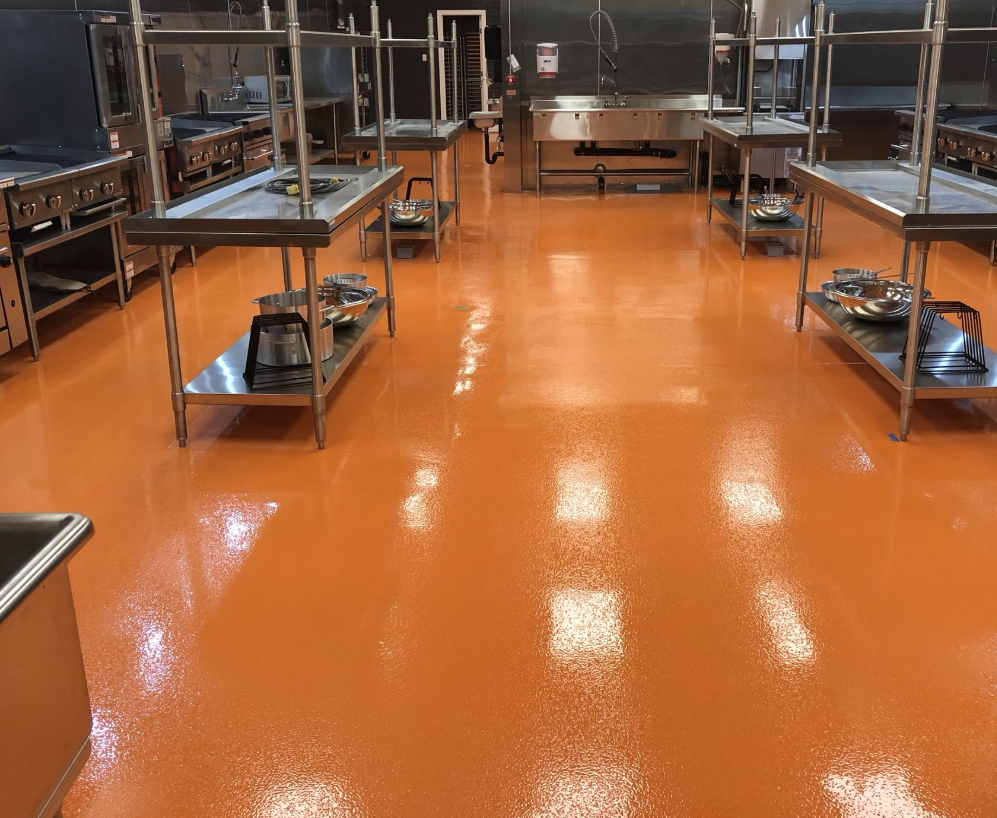
Some places of work require something more than an effective and simple to scrub floor. The static electricity also may require protection in areas where electronic equipment or sensitive components are handled or where flammable materials are present. Under these conditions, uncontrolled discharge of statics may be equipment damaging, disrupting operations, or raise safety issues.
In this respect, the use of ESD epoxy flooring can be beneficial. It is created as an electrostatic control system, aiding the movement of static electricity in a contained fashion instead of accumulating and then releasing.
What Is ESD Epoxy Flooring?
ESD is an acronym which means Electrostatic Discharge. ESD epoxy flooring is an expert flooring technique intended to aid in managing electrical electricity in a limited region.
An ESD system is usually wired and grounded as opposed to the normal epoxy floors. The aim is to offer a regulated conduction of electrical charges.
This flooring is just one component of a good ESD protection program. Other things that can influence the static control may include footwear, workstations, grounding methods, humidity and practice of the employees.
Where Is ESD Flooring Used?
ESD flooring is also typically used in areas where there might be issues brought about by occurrence of static electricity. Some possibly unique needs in static-control might exist in electronics manufacturing areas, laboratories, cleanrooms, healthcare spaces, data-related facilities, and some industrial environments.
In order of making an example, electronic parts may be sensitive to even quite minor electrostatic discharge. Sensitive components may be impacted by a person who does not even sense the shock discharge.
Appropriate ESD flooring system can be one of the components of a bigger scheme of protecting equipment and preserving controlled working conditions.
Benefits Beyond Static Control
The fact that epoxy flooring can give a relatively seamless surface which is also very strong when installed is one of the qualities of the epoxy flooring that is useful. This may be useful in job sites where floors should be cleaned regularly.
The smooth surface may provide easier maintenance routine by limiting the places that dirt and debris could have. The flooring can also be resistant of regular work traffic, abrasion and chemicals depending on the system that is chosen.
This implies that an ESD floor can be used in a number of ways. It is able to assist in the creation of a static ground as well as serve a useful purpose as a daily usage surface.
Proper Installation Is Important
ESD flooring is not a typical floor coating that is to be treated as such. Every system should be designed and installed properly to take into account electrical properties and ground requirements.
The current concrete surface usually must be checked and smoothed out prior to being installed. Surfaces, moisture, cracks and surface damage might have to be addressed and then coating can be applied.
Once the correct epoxy materials are required, conducting layers, grounding points, and correct epoxy materials should then be installed based on the needs of the specific facilities.
The other significant aspect of the process is testing. The completed system is to be verified to ensure that it functions within the necessary electric range.
Choosing the Right System
All ESD environments need not have the same requirements. One requirement of a facility that works with electronic components might be quite different as compared to a laboratory or an area of industrial production.
Traffic, cleaning, exposure to chemicals, equipment, moisture, and the electrical resistance needed should be factors to be taken into consideration before settling on a flooring system.
The other thing is to know the standards and requirements of the particular application. An ESD expert professional in flooring can give advice on which solution to undertake.
Maintaining an ESD Floor
Periodic repairs will maintain the quality and look of the flooring. The cleaning processes must be in line with the ESD specific system and must not leave any residues which may alter its properties.
Periodic checking of the floor should also be done to find out it has cracks, damages, wear and any other changes that might influence its performance.
In general, ESD epoxy flooring may be a useful flooring system in the areas where the issue of the statical control is of interest. Incorporated, together with a long-lasting working surface, and manageable stasis dissipation, when constructed, mounted, and examined appropriately, can create a robust working area. When dealing with a facility which handles sensitive equipment or parts, one should choose appropriate ESD flooring system on the basis of the honest requirements of an operational environment instead of its appearance.